


In the Image of Her: Recovering Motherhood in the Christian Tradition is a fascinating and deep read on the history of motherhood. Theologian Amy E. Marga writes brilliantly on the nuances and complexities of women and mothering throughout history. One may innocently (and incorrectly) assume that motherhood has been generally well-regarded in Christian history and that there is not much to learn. However, Marga delves deep into this important topic and uncovers the realities of mothering in light of Christian faith throughout history.
This book is a well-written academic resource for those seeking historical context and understanding of women, particularly regarding the practice of mothering. Stories of specific women are woven throughout the rich theological discussions regarding themes such as women’s bodies, sin, Eve, Mother Mary, women saints, the suffering mother, and mothering as it was experienced during the colonization of North America.
Using a chronological approach, Marga leads her readers through time, starting with the early church. She notes the wary nature with which women and mothering were approached by many of the early church fathers. There was an uneasiness about the strong bond between mother and child because it represented two of the “most profoundly creaturely things: namely, the female body and earthly attachments.”[1] Instead of mothering being held in high regard, it was childless virginity that was seen as the most spiritual state. Marga explains the culturally popular views of women and their bodies as porous, unclean, and sinful. In addition, children were a distraction to one’s devotion to God. Therefore, it was women who had set aside mothering and family that were held up as great women of faith. In Marga’s words, “Christian mother-martyrs and mother-ascetics believed that their own mothering was distracting them from being proper followers of Jesus.”[2] She explores the stories of Perpetua, Felicity, Paula, and Melania as examples of such women of faith.
During the medieval period, Marga explores how the church saints revered Mary as the mother of Jesus. Somehow Mary was seen as more accessible and more understanding than the divine male Jesus or transcendent God. Even though virginity was most prized, it was Mary’s mothering (not virginity) that drew people to God. The blood of Jesus and the breast milk of Mary was seen as a sort of “double intercession” as Mary was included in the salvific work of Christ.[3] Marga then explains that the Reformation’s “correction,” seen in the prioritizing of Scripture and the male Jesus (allowing for the dismissal of Mary and women saints), was perhaps partially due to people’s discomfort with the female body. As a complete paradigm shift, the Reformation then praised women as mothers and keepers of the home; it became Christian marriage and the raising of children that were seen as the preferred Christian role for women of faith. Moral mothering and maternal self-sacrifice were now esteemed, and women were praised for pursuing marriage and motherhood. Marga includes some intriguing examples of women who used their position of mother as a public platform for society and the church. It is interesting to see how women subverted cultural expectations without directly challenging them.
Marga then moves on to investigate mothering in North America during colonization. Similar to the Reformation era, White Protestant motherhood was celebrated for its domesticity and self-sacrifice, but the same respect was not granted to mothers of colour or mothers who were not middle- or upper-class, such as slave mothers. As a White woman, I was prompted to consider my own false or incomplete understandings of women and mothering as I read about how the same esteem was not (and continues not to be) extended to Indigenous or African-American mothers.
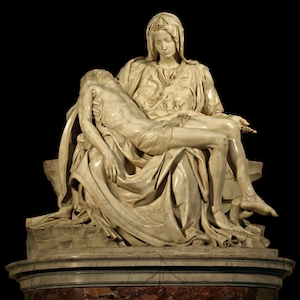
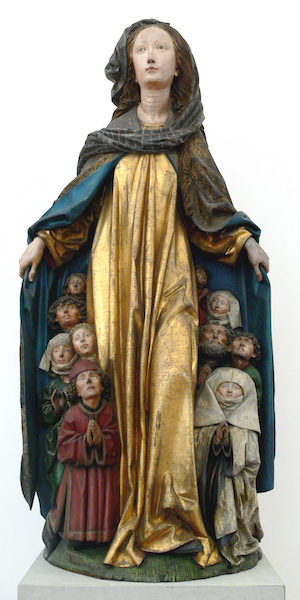
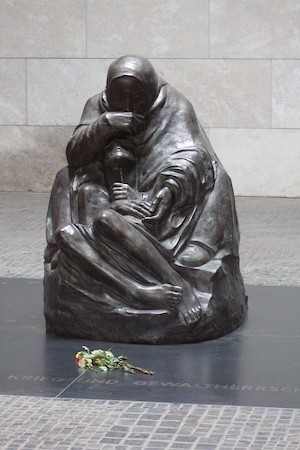
Beautiful full-colour artwork is also included throughout the book, such as the image known as Schutzmantelmadonna, a depiction of Mary sheltering sinners with her maternal cloak. The image of the famous Pietà by Michelangelo is included, along with the less familiar Mother with Her Dead Son by German artist Käthe Kollwitz. The inclusion of artwork adds an extra dimension to the book, showing that these views regarding women and faith were also evidenced in artistic expressions of culture.
Throughout the book, Marga exposes the patriarchal, sexist, and racists views surrounding mothering that have existed throughout the centuries. She addresses the belief, promoted by early church fathers such as Tertullian, that the maternal body was essentially unclean. This idea aligned with the popular Roman cultural view that the ideal and highest form of humanity was the male body, which was further supported by Christian male theologians with the fact that Christ had been born male. However, Marga highlights the incarnation as affirmation of the maternal body, as this was the chosen way for God to enter the world. She notes how shocking this must have been—and perhaps, continues to be! Marga also observes how the Cult of Domesticity (also known as the Cult of True Womanhood) particularly harmed mothers of colour and Indigenous mothers in North America.
I cannot recommend this book highly enough. The historical understandings throughout time, the depiction of women in various times and contexts, and the ideas presented regarding mothering make for much pondering and good conversation. Marga does an excellent job of bringing to light the lives of women—specifically and generally—and the practice of mothering while uncovering the theological convictions and cultural expectations that undergird our understandings of mothering. Whether your interest is church history or women or mothering or the development of the Christian faith, you will be grateful that you picked up this book.
[1] Marga, In the Image of Her, 20.
[2] Marga, In the Image of Her, 37.
[3] Marga, In the Image of Her, 85.
You May Also Be Interested In:
Book Review: The Biblical World of Gender: The Daily Lives of Ancient Women and Men
Book Review: Calm and Quiet My Soul: A Holistic Approach to Spiritual Care for the Mothering Pastor
Book Review: The Struggle to Stay: Why Single Evangelical Women Are Leaving the Church
Book Review: Grace is Not Faceless: Reflections on Mary
Book Review: Mary and Early Christian Women: Hidden Leadership
Book Review: Women and the Gender of God
Book Review: Your Daughters Shall Prophesy: Amplifying the Voice and Place of Christian Women
Book Review: Indigenous Theology and the Western Worldview