

Few would deny we live in a deeply divided world, one that generates conflict over differing values and opinions, and few are willing to enter the fray to explore or question narratives and allegations. A trigger-happy cancel culture rewards insiders with virtue-signaling and maligns “outsiders” with accusations that control the narrative through intimidation. Equally, algorithms drive online divisions, and in-group rhetoric deepens strife. Sadly, well-intentioned people collectively accept flawed information that vilifies others and reinforces ingroup dogma, cohesion, and compliance. These dynamics are forms of manipulation and control that reject the critical thinking needed to gain insight and learn truth. A gracious commitment to “come, let us reason together,” by opposing parties, is essential and needed now more than ever.
In a similar way, the manipulation of facts is used to control, dominate, and intimidate women are especially noted in both cults and patriarchal churches committed to male authority and female submission, as Bethany Jantzi and Kathy Myatt demonstrate in this issue. Yet faith communities are not alone in the struggle to address “narrative control.” We also see the manipulation of facts in other crucial fields like science and medicine, where competent research is rejected in favor of dogma. Here physician and geneticist, Francis Collins, offers enormous help by reclaiming critical thinking and worthy, proven sources of knowledge and truth in rebuilding trust, expertise, humility and integrity for the greater common good.
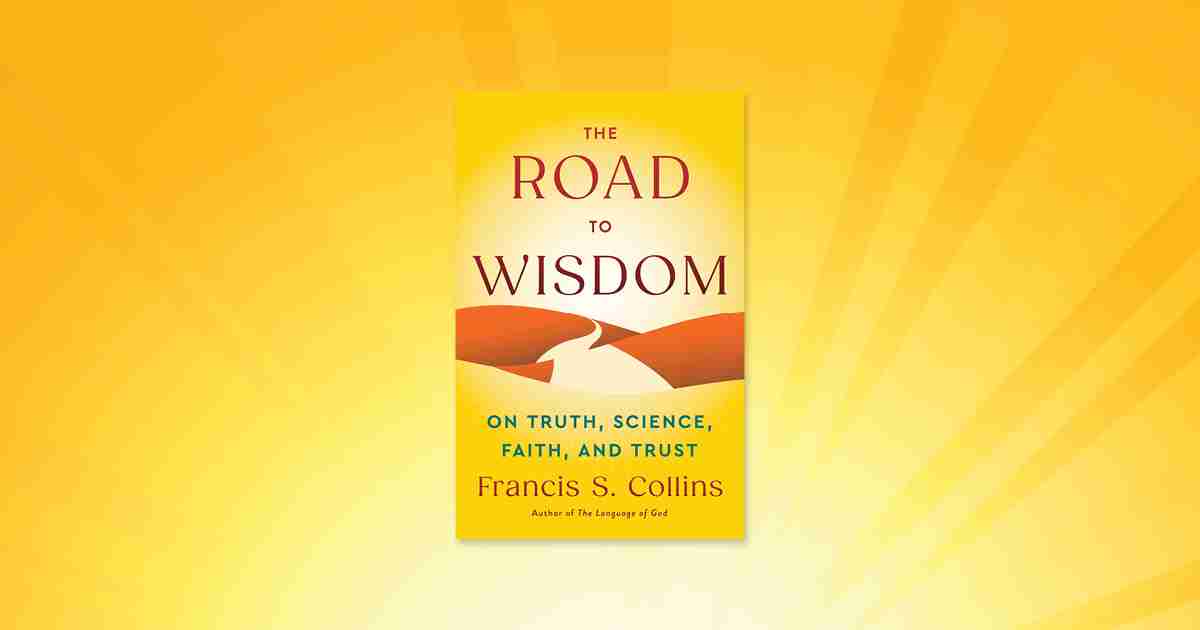
Collins`s contributions to medicine and faith are impressive, and for many, lifesaving. A devout Christian, Collins`s leadership of the Human Genome Project upended diseases like Cystic Fibrosis and Sickle Cell Anemia. Serving under three different US presidents, Collins also led the National Institute of Health during COVID-19. Throughout his career, Collins battled cynicism and distrust, calling for a return to traditional, valid sources of truth, knowledge, and wisdom that can be trusted. Amassing his vast understanding of epistemology—how we know what we can know as factual—Collins makes a compelling case in his newest book, The Road to Wisdom: On Truth, Science, Faith, and Trust. Dedicated to his pastor and friend, Tim Keller, The Road to Wisdom offers crucial insights to empower everyday people in assessing if an idea, accusation, or belief can be (reasonably) trusted. In large part, The Road to Wisdom seeks to recover critical thinking too often minimized as assumptions go untested—a gameplay used in defending male leadership. Elegantly presented, Collins’s model is rooted in Christian values and offers a commonsense approach in navigating intimidation by controlling and manipulative people.
In deciding who or what to trust, Collins recommends four essential qualities that cults and high-control groups often lack: integrity, competence, aligned values, and humility. Testing for each quality takes time; ideas or individuals that demand immediate trust and reject questioning fail the test. To make his point, Collins had a coffee mug made that reads, “Please don’t confuse your Google Search with my medical degree.” Research is a time-consuming but necessary process that protects us from cultural demands to simply accept an unquestioned narrative. People or ideas worthy of our trust will welcome questions and be able to stand up to scrutiny.
Consider the time it has taken to thoroughly analyze patriarchal assumptions imbibed uncritically through centuries of flawed interpretations of Scripture alongside false allegations about women and their character. Egalitarian scholars have invested decades to thoroughly critique complementarian beliefs through a systematic analysis of history, biblical scholarship, theology, philosophy, and social ethics. The evidence upholding egalitarian theology has held the course, bringing clarity, truth, and healing to marriages, families, churches, and organizations. We give thanks for the humility, integrity, competence, and shared values that guided this process.
We are also deeply grateful for the honorable and irenic dialogue with our beloved complementarian colleagues, as together we formed a learning community that discerned the teachings of Scripture. This truth-discerning process casts vision for groups who differ on crucial beliefs but are willing to invest the time and effort to question their assumptions and learn the facts. I cannot think of a better resource than that of Francis Collins’s The Road to Wisdom in determining what should be trusted and how to avoid manipulation and control. For those exploring egalitarian theology, consider using Collins’s book beside resources like Janet George’s Still Side by Side—a concise overview of Scripture’s teachings on women. May we always be courageously committed to an irenic “come, let us reason together,” trusting the Holy Spirit as our guide!
Notes
- Francis Collins, The Road to Wisdom: On Truth, Science, Faith, and Trust (Little, Brown, and Company & Worthy Books, 2024), 185.
- Paul himself instructs us to “test everything and hold to what is good.” (1 Thess. 5:21)