

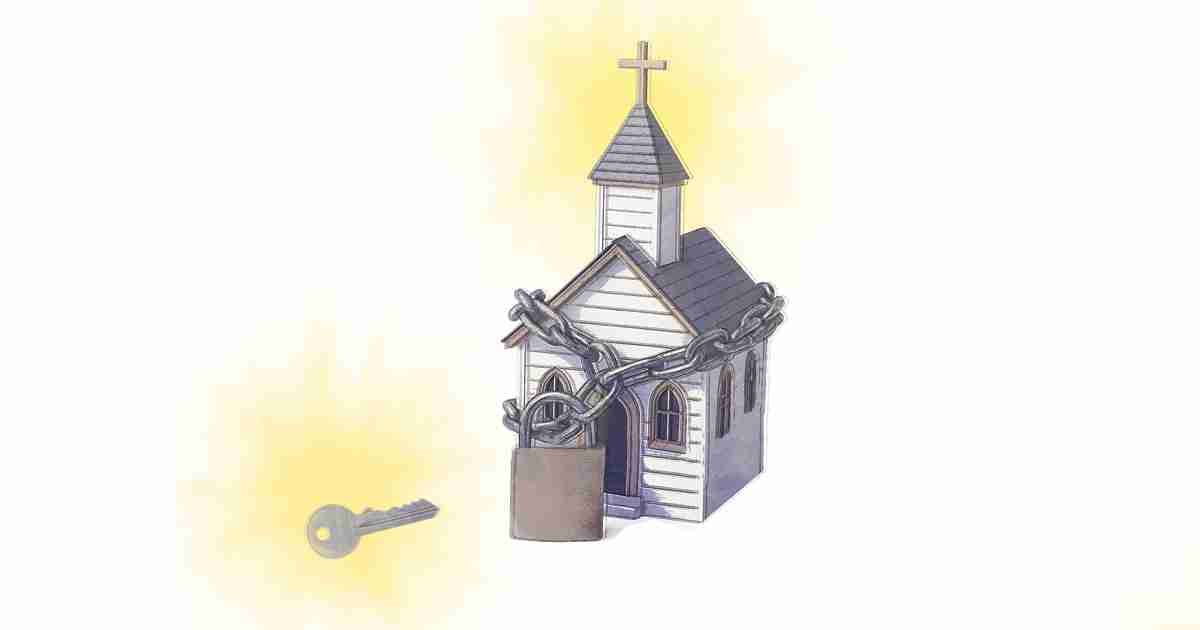
The abuse of power and control weighs heavily on those who experience it, creating wounds that may last years, affecting us and our relationships in ways we may not even recognize. Through our ministry, Becoming Free, we assist people to better understand and recover from their unique harmful religious or spiritual experiences and the painful relational dynamics of family estrangement. Through this article, we want to loan hope, promote the value of emotions, and provide some helpful insights for a healing resilience to occur following religious abuse (H.E.I.R.).
Heidi’s Story
It was just a week before my twenty-first birthday. I found myself in an all-white dress standing in a park on a cold day in Sacramento, California. It was my wedding day, and the year was 1979. I was preparing my mind as I readied myself to walk down the aisle. The decision to marry this man was not a choice I embraced, but a presumptuous match imposed upon me. My heart and mind doubted the choice, but I had been conditioned over the past four years to distrust my own mind and instead submit to my elders/leaders. Soon, I found myself walking down the aisle toward a man I would later learn was obsessed with dominance, who was highly manipulative and very dangerous.
As a young Christian woman, my heart was devoted to pleasing God. I desired to live a godly life and, at that time, I thought I knew so little about God and the Bible that I looked up to those whom I thought knew more. During those early years, I was surrounded by those who believed in and taught male-dominated hierarchy regardless of spiritual maturity or growth. Submission, acceptance, and obedience were applied exclusively to women and used alongside what I now recognize as the misuse of Scripture.
During that time, I endured many outbursts of rage over small matters; Scriptures like Ephesians 5:22 were often yelled in my face as I was thrashed against walls. I was locked in rooms and left stranded in remote places for hours with no money or phone. The man who called himself my husband would take off for days at a time, leaving me with no knowledge of his whereabouts. He was full of power plays and, during the latter years of our marriage, had one-night stands, justifying each one with a sense of entitlement. Even more painful was the fact that the pastor of the church we attended believed my husband’s account over mine and was of no help to me. He was apathetic—at best—toward my valid concerns and insisted that further submission was the answer to our troubled relationship, citing 1 Peter 3:1.1
After six years and having given birth to a disabled son, I could take no more of these abuses and found the strength I needed. I held onto the belief that, if God is love, he would understand why I had to leave, for my sake and my son’s. This decision forty years ago was the first step of my true journey into trusting God and my own instincts, learning the gospel of grace and truth, and the redeeming power of my great savior, Jesus Christ.
After years of growth, I have come to understand clearly the imbalance and abuse that hierarchical headship teaching can cause within a marriage.2 I eventually married Pat, a wonderful man, and we live out a fully egalitarian marriage. We’ve had our challenges, but equality, a loving partnership, and mutual submission are core values in our relationship. Domestic abuse in Christian marriage is more widespread than most people realize, but there is healing and hope.3 Long ago, I embraced Jeremiah 29:11: “For I know the plans I have for you, declares the Lord, plans to prosper you and not to harm you, plans to give you hope and a future.”
Pat’s Story
I grew up with an unquestioned presumption of male-headship teaching thanks to my parents’ twenty-five-year marriage. After my father’s repeated infidelity, my mother’s marriage counselor candidly told her, “Mary, your only need is to go home and grow a backbone.” The marriage ended. Years later, this thoughtful admonition and my mother’s tenacious desire to learn and grow encouraged me to break my own patriarchal patterns as a man.
In January 1984, my then-wife and I left a church that strongly held to male domination, suggesting it was a core Bible teaching. We had been married in that church and had four children. The twisting of Scripture abounded, resulting in a heavy-handed authoritarian form of spirituality. The leader decided my occupation, my level of education, who we would include in our social circle, even what we could think and what emotions we were allowed. He was at the head of a totalitarian religious system and imprinted us with a twisted view of leadership. Even after leaving this church, it would be many years before its influence would be mitigated and new egalitarian values would take hold.
I had remained in this church for fourteen years for reasons that revolved around undue influence by the male leadership, a non-biblical view of gender equality, bad life choices, a lack of healthy role models, and birth-family patterns of dysfunctional rules, roles, and lack of personal boundaries. I had been taught that it was my job, as a husband, to rule my wife and to make all the important decisions for our family.4
Like Heidi, I have been impressed with a particularly meaningful verse: Philippians 3:12–16 speaks to the necessity of humility and dependence upon God. Healing from this controlling, cult-like group happened slowly. Whether for an individual or a marriage, it is necessary to understand that recovering from religious abuse is a process of religious, or spiritual, growth. Optimal recovery requires processing past beliefs and adopting new, hopefully truer, ones that inevitably affect behaviors in positive and constructive ways.
We suggest six essential recovery principles that can provide a basis for understanding recovery from religious abuse. We use the acronym S.E.C.U.R.E.5
Safe Haven and Secure Base
The most helpful starting place for individual or marital recovery requires a relationship or relationships that can provide a safe haven and secure base.6 The support and experience of emotionally healthy people can provide an empathetic holding environment. This may or may not initially include a spouse, because others might be better able to provide emotional stability. Following their exit from religiously abusive groups, former members are very vulnerable in relationships. If a safe-haven relationship does not include one’s spouse, at a minimum it needs to be with someone of the same sex—men with men and women with women. This we recommend to help minimize the possibility of emotional affairs or other unhealthy attachments.
Healthy, alternative, non-spousal relationships might include those with a professional clinician, a certified life coach, or a trusted friend or couple. Determining who might be safe and not safe following religious abuse can be challenging.
Emotional Engagement
Upon leaving, former members of abusive religious groups may act and react like fire-breathing dragons with emotional hypersensitivity or icebergs with frozen, submerged emotions. Neither mode is conducive to recovery. Recognizing the value of constructively working with emotions is important. Working through difficult emotions with a professional clinician or life coach, or by reading well-informed books that lead to self-reflection can help us reeducate ourselves to our value and place in our personal and marital growth. Part of this education may involve working with a therapist. Both of us have found that Emotion Focused Therapy (EFT) provides immense support and helpful encouragement.
Cognitive Focus
Just as we are emotional beings, so are we thinking beings. In our experience as former members of abusive religious groups, the mind was viewed negatively as an untrustworthy hindrance to faith. Learning to engage the mind through education, then, is an essential principle that former members must apply to themselves. This may involve formal education, but at a minimum, it must include informal practices through resources like books, articles, podcasts, movies, online lectures, or mentoring by those more mature and better informed about life in general or about religious abuse specifically. The point is to not only become better educated about the world in which we live, but to value the life of the mind and our ability to think for ourselves. For couples, this education might include all of the above, done together as a couple.7 We often find great benefit in reading out loud together and then discussing the ideas or concepts we have come across.
Unconditional Positive Regard
Practicing and promoting unconditional, nonjudgmental acceptance of each other in one’s marriage can be a huge challenge after a couple has developed a habit of defaulting to criticizing others. This can be changed through honest self-reflection.
One way to help with this self-examination is to write our own story within the abusive religious group. Doing this exercise and sharing the written story with our spouse can be cathartic and help us determine our level of participation in the group. It can also help promote greater empathy for others and provide a possible roadmap to what individual and couple processing we still need to do. Intentionally seeking out humble people and pursuing a relationship with them can provide both modeling and mirroring of what may be authentic within us and what may yet need growth.
Relationships
We can experience the unconditional positive regard mentioned above only through active relationships with those who demonstrate healthy and authentic personal growth. For married couples, attending marriage workshops, support groups, and/or well-run codependency groups can help reshape our understanding of healthy relationships. Becoming more educated about what healthy relationships look like is crucial after the damage a religious dysfunctional church or group might have done. Redefining and experiencing healthy relationships can be both excruciatingly difficult and rewarding. Over time, revisiting our family’s relational dynamics can offer insight for understanding and making changes that might be needed.
Education About Family Systems
This sixth essential principle provides context for individual and marital recovery following religious abuse. It is not uncommon for some former members to come to this principle later in their recovery; both the topic and the process typically feel more dangerous, threatening, and overwhelming than the other principles we have listed. Learning about family systems involves learning the relevance of family rules, roles, and boundaries and how, as former members, we may have carried these patterns and behaviors over to the abusive religious environment. Counseling with a well-qualified family counselor can bring insight into related factors and issues we may not have yet considered.
Whether or not we realize it, we are all shaped by others. In a marriage, our spouse is potentially our most crucial support person, but one person can’t provide everything we need. Healthy people are a primary source of recovery, and ultimately God provides for us the relationships we need at the time we most need them. If you are reading this article, our hope and prayer is that you will be encouraged to move forward in hope, affirm your own emotions, and grow in insight so you can be more resilient in your healing. Seek out all the support you need!
Notes
- For an exploration of this passage with its context, see Giles, Kevin, The Headship of Men and the Abuse of Women: Are They Related in Any Way? (Wipf & Stock Publishers, 2020), 69–73.
- Rebecca Merrill Groothuis, Women Caught in the Conflict: The Culture War Between Traditionalism and Feminism (Wipf & Stock Publishers, 1994) and Kevin Giles, The Headship of Men and the Abuse of Women: Are They Related in Any Way? (Wipf & Stock Publishers, 2020).
- For a plethora of supportive research showing widespread domestic abuse in Christian marriages, see Kevin Giles’ book The Headship of Men and the Abuse of Women: Are They Related in Any Way? (Cascade Books, 2020), 9–19.
- A more in-depth account of Pat’s story is titled Nothing Need Go Waste, available upon request.
- For greater detail and an apologetic defense of these principles see Patrick J. Knapp, Understanding Religious Abuse and Recovery: Discovering Essential Principles for Hope and Healing (Wipf & Stock Publishers, 2021).
- For an insightful and concise article on attachment theory, and the safe haven and secure base, see Maria L. Boccia, “Human Interpersonal Relationships and Love of the Trinity,” Priscilla Papers 25, no. 4 (2011).
- For a summary of how marital repair may best occur, we suggest, “Marital Damage and Recovery Following Religious Abuse,” in Wounded Faith: Understanding and Healing from Spiritual Abuse, ed Dr. Neil Damgaard, (International Cultic Studies Association, 2021).
- For more information, visit www.becomingfree.org.