


April is Black Women’s History Month, and in celebration, here are seven resources that highlight specific Black women who’ve changed the world—and particularly, the church—for the better. We start with Walatta-Petros of sixteenth-century Ethiopia and Paulina Dlamini in South Africa, then move across the ocean to North America, recounting the lives of leaders from Sojourner Truth to Coretta Scott King.
At times, it may seem that Black women’s history is defined by their struggle against injustice, and as the writer of the Sojourner Truth article reminds us, celebrating her work also means lamenting why she needed to be called. The eighth article constitutes a powerful reminder Black women are whole people, not archetypes of tragedy, and that recalling their history also means making space for the love and joy they have brought into the world around them.
Photo by Harmeet Kaur on Canva.
1. The Apostolic Life of Walatta-Petros
In the year 1591, in the east African empire of Ethiopia—a place that had practiced a form of Orthodox Christianity since antiquity (cf. Acts 8:26–40)—a monk approached the nobleman Bahir-Saggad to prophesy the birth of a daughter. The monk told him, “I have seen a great vision . . .” READ.
By Bridget Jack Jeffries | March 6, 2024

2. Women in Scripture and Mission: Paulina Dlamini
Missiologists are beginning to understand that the spread of Christianity in Africa was largely due to Africans internalizing the gospel and spreading it in a culturally relevant and adept manner, often into regions where missionaries had not ventured. Women were critical to this work, as they converted to Christianity first and in much higher numbers than men. Paulina Dlamini is one such example. READ.
By Kimberly Dickson | August 22, 2022
3. Celebrating Sojourner Truth as Extraordinary Also Means Lamenting Why She Had to Be
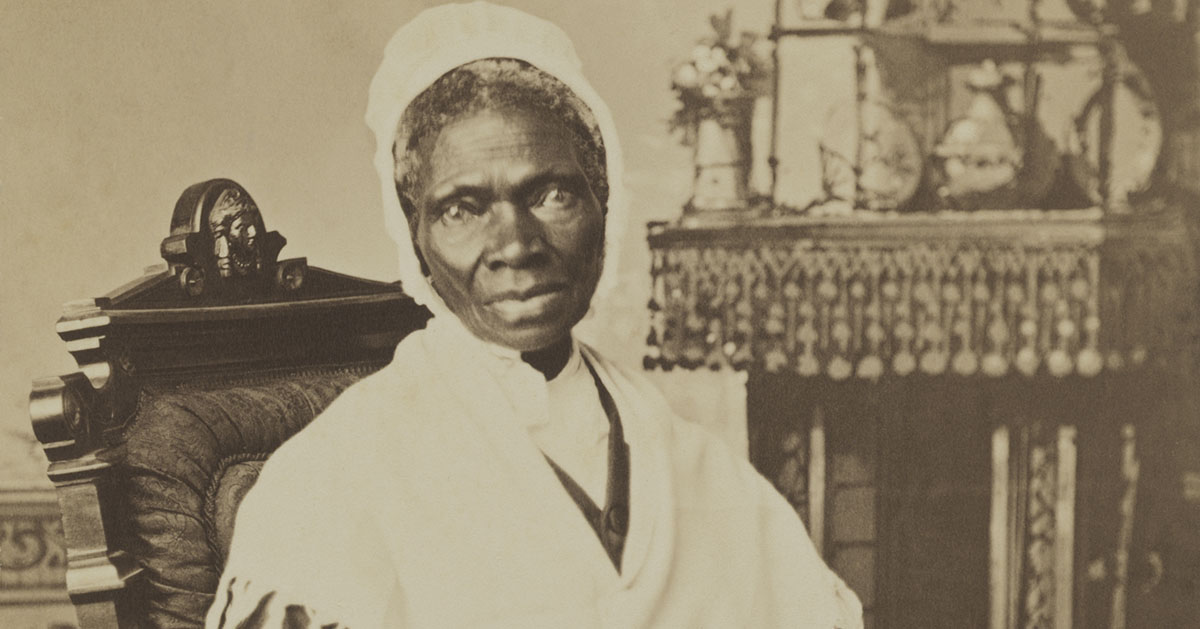
You don’t have to be a history nerd to be gripped by the events of Sojourner Truth’s life: a risky escape from slavery, a legal David-and-Goliath battle, a profound spiritual conversion, a life spent speaking truth and advocating for justice. Born Isabella Bomfree in 1797, in 1843 she chose the name “Sojourner Truth” to reflect the call she heard from the Holy Spirit to become a preacher. READ.
By Sarah Lindsay | February 17, 2021

4. Why We Can’t Forget the Women Leaders of Azusa Street
I grew up revering the events which took place on Azusa Street in the early 1900s, which, according to oral tradition, were the springboard for the Pentecostal movement. My family lineage proudly boasts of four generations of Church of God in Christ (COGIC) members. Members of my maternal and paternal sides of the family have gladly served the Lord . . . READ.
By Michelle D. Williams | February 10, 2021

5. Jennie Johnson and Ordained Women’s Ministry in Canada
While most Canadian denominations didn’t earnestly consider the question of women’s ordination until the mid-to-late twentieth century, there are stories of several ordained women in Canada before that time who laboured to spread the gospel. One of the country’s earliest known ordained women was a Black preacher named Jennie Johnson, who ministered in a Baptist church almost forty years . . . READ.
By Taylor James Murray | March 6, 2024

6. Educator and Visionary: A Profile of Mary McLeod Bethune
In July 2022, Mary McLeod Bethune became the first African American woman to be honored with a statue at the US Capitol’s National Statuary Hall Collection. An educator and activist, Bethune appeared on a postage stamp in 1985. Her home is now a National Historic Site. Most importantly, her courage and commitment have inspired generations of Americans. Given her work in education, leadership . . . READ.
By Rachel Larsen | March 16, 2023

7. Mrs. Coretta Scott King: The Enduring Legacy of a Black Woman Leader
Not too long ago, I served on the panel of a leadership conference in Chicago. The conference conveners asked us to name a person we thought was a great leader and explain why that person was so great. I named Mrs. Coretta Scott King. She was not just the wife of Dr. Martin Luther King Jr. and the mother of his children; she was a leader and civil rights activist in her own right. READ.
By Jeanne Porter King | February 22, 2023

8. Righteous Love: Making Space for Love Among Black Women
She was born the youngest child of very famous and illustrious parents—Black excellence and struggle. She was the exact intersection between everything they had done before her and everything they had planned to do with her mind in the future. She was a lyrically poetic love letter written in emojis and TikTok videos, to the ingenuity of Black women who used magic to transform . . . READ.
By David Hart | February 8, 2023