

Search Resources
Use the search and filter below to search within the CBE Resource Library. For best results, please select a type.
Welcome to CBE’s Resources
You searched by:
Topic: Theological Studies
Found 318 resources that match your criteria.

Two by Two: The Animals and the Twelve
By: Monica Napoli Warren | April 1, 2026
A fresh look at Mark 6:7 and the phrase “two by two” reveals a connection to Genesis and its pattern of men and women working together. Seen in this light, Jesus’s sending of the disciples reflects the restoration of partnership as part of God’s plan. Rather than limiting women, the Gospels point to a [...]
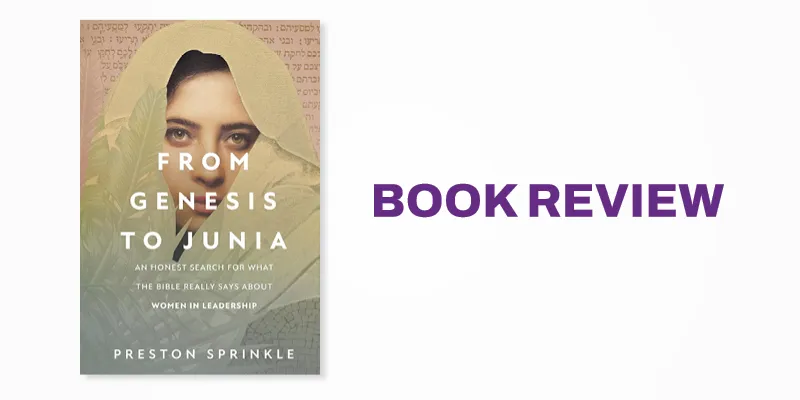
Book Review: From Genesis to Junia
By: Kris Randall | March 18, 2026
This review explores Preston Sprinkle’s From Genesis to Junia, highlighting his accessible, exegetical case for women in church leadership and biblical equality, while noting both its strengths and limitations.

Imago Dei Women?
By: Kara Angus | March 6, 2026
Did God declare women to be imago Dei? Did God declare women good? Yes. Then we must as well.
Rape, Dismemberment, and Chaos in Judges 19–21
By: Kimberly Dickson | February 27, 2026
The unifying theme of Judges 19–21 is the dismal failure of Israel to care for their most vulnerable, ultimately contributing to the demise of the nation. This theme is the culmination of two different agendas within the story.
Mutuality as Shared Feelings: A Devotional on 1 Corinthians 13:1–7
By: Paul Abdul | February 11, 2026
This devotional reflects on 1 Corinthians 13 to explore how Christlike love forms the foundation of true mutuality. Through Paul’s description of love as patient, kind, humble, and self-sacrificial, readers are invited to examine their attitudes and practices in relationships and to take concrete steps toward shared life, trust, and faithful partnership in community.

Let Them Learn: Why Theological Formation Still Matters, Especially for Women
By: Cynthia Degrie | January 14, 2026
As churches increasingly downplay theological education, believers are left spiritually undernourished—and women bear the greatest cost. This article explores how denying women access to deep theological formation weakens their spiritual agency, leaves them vulnerable to misuse of Scripture, and distorts discipleship. By recovering Jesus’s model of training and commissioning both women and men, [...]
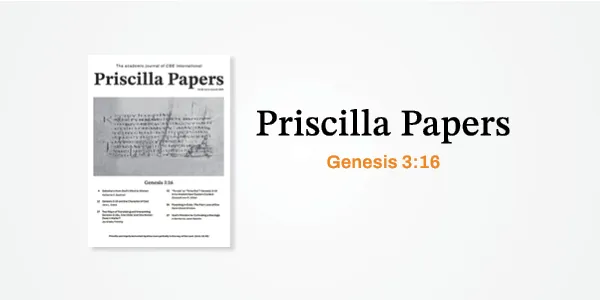
Selections from God’s Word to Women
By: CBE International | November 7, 2025
This article presents Katharine Bushnell’s argument that Genesis 3:16 has been misinterpreted to justify women’s subordination and suffering, contending instead that the passage warns Eve of Satan’s deception rather than declaring a divine curse. These lessons were later gathered and published as God’s Word to Women in 1921, a work reprinted by CBE [...]
Genesis 3:16 and the Character of God
By: Jane L. Crane | November 7, 2025
Crane explains that Genesis 3:16 has often been mistranslated, causing misunderstandings about women and God’s character. Using early Hebrew sources and the research of Katharine Bushnell and Walter Kaiser, Crane shows that the verse describes the woman turning toward the man and the serpent’s deception rather than God punishing or subordinating women, revealing a [...]
Two Ways of Translating and Interpreting Genesis 3:16a, One Older and One Newer: Does It Matter?
By: Joy Fleming | November 7, 2025
Fleming compares two major translations of Genesis 3:16 and argues that the King James Version more accurately reflects the Hebrew text than later versions like the RSV, which wrongly portray the verse as a curse of pain in childbirth. She concludes that the passage reveals both sorrow and blessing, showing God’s recognition of human struggle [...]
“To rule” or “To be like”? Genesis 3:16 in Its Ancient Near Eastern Context
By: Elizabeth Ann R. Willett | November 7, 2025
Willett argues that Genesis 3:16 has long been mistranslated and misunderstood, suggesting it refers to increased work and pregnancies rather than pain in childbirth, and to mutual desire between man and woman rather than domination. She explains that the Hebrew word mashal means “to be like” instead of “to rule,” portraying the verse as a reflection [...]