

Search Resources
Use the search and filter below to search within the CBE Resource Library. For best results, please select a type.
Welcome to CBE’s Resources
Found 4758 resources that match your criteria.

Editor's Reflections | Autumn 2013 (27.4)
By: William David Spencer | October 31, 2013
When editors Ronald Pierce and Rebecca Groothuis’s Discovering Biblical Equality came out in 2005, many were surprised to read its subtitle: “Complementarity without Hierarchy.” “Wasn’t that term ‘complement’ already taken? Didn’t it already mean ‘hierarchical’ by its inherent nature? Was this a case of co-opting a word and attempting to redefine [...]
Leadership of Women in Crete and Macedonia as a Model for the Church
By: Aída Besançon Spencer | October 31, 2013
A superficial glance at the New Testament in translation, combined with an expectation of a subordinate role for women, results in generalizations that Paul commands women not to teach or have authority (1 Tim 2:11–15), except in the case of older women teaching younger women how to be housewives (Titus 2:3–5), and women are not to teach in [...]
The Authority of the Bible and the Authority of the Theological Tradition
By: Kevin Giles | October 31, 2013
What the creeds and confessions teach is called “the theological tradition,” or “the interpretative tradition,” or just “the tradition.” Evangelicals agree this codified body of prescribed doctrines is a subordinate authority. Scripture is the ultimate authority. This is true, yet, in practice, these two authorities cannot be sharply separated.
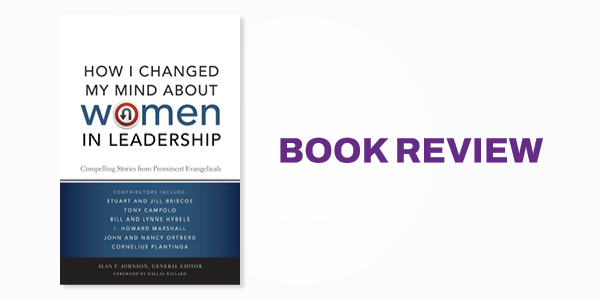
Book Review: How I Changed My Mind About Women in Leadership
By: Shirley L. Barron | October 31, 2013
Alan Johnson, emeritus professor of New Testament and Christian ethics at Wheaton College (Illinois), has put together autobiographical accounts of twenty-seven evangelical leaders, both men and women, from many denominations.

Low Expectations
By: Christine A. Smith | October 30, 2013
Women called of God to serve as senior/solo/lead pastors are frequently confronted with barriers imposed by systems, structures and individuals. However, some barriers lie within. Below is an excerpt from Beyond the Stained Glass Ceiling: Equipping and Encouraging Female Pastors, chapter 3, “What Stands in Our Way?” pp. 49–51 (Judson Press, 2013) that confronts this subtle [...]

Recognizing the Women Workers of Sri Lanka
By: Jasmine Obeyesekere Fernando | October 30, 2013
Much of the economy of Sri Lanka runs on the hard work of low wage earning women. These women who are from lower social strata of society contribute significantly to the national economy, but their role and contribution are underemphasized and undervalued. Garments and tea are Sri Lanka’s chief exports, bringing in the highest [...]

Submission and the Creation Account
By: Gail Wallace | October 27, 2013
Views on submission exist on a continuum, but generally speaking, egalitarians support mutual submission in marriage, and church leadership based on giftedness rather than gender; while complementarians support the unilateral submission of wives, and predominately male church leadership. Both hold the Bible in high regard – the difference comes in interpretation.
Have You Revisited Mary and Martha?
By: Mary Stromer Hanson | October 23, 2013
Have you revisited Mary and Martha lately (Luke 10:38–42)? You remember their house where Martha is “over busy” making preparations for Jesus’ arrival, and Mary ignores the obvious need to help her sister, preferring to listen at the feet of Jesus. In desperation, Martha appeals to Jesus, the male authority in the house, to get [...]
Caleb and Achsah
By: Aliyah Jacobs | October 23, 2013
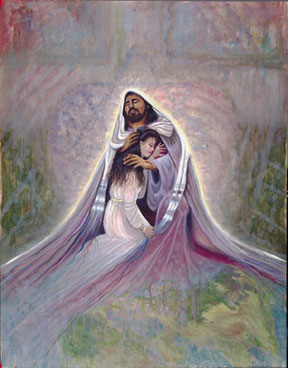
Caleb peered down at his arms, his battle-scarred muscles remained strong although he had grown tired. He had remained faithful to God and to the cause and now it was time to enjoy his inheritance. To bask in the sunlight and enjoy the cool breeze that rustled the leaves of the Palm trees that lined [...]

Do the Five Love Languages Love Women Too? (Part 2 of 2)
By: Ashleigh Bailey | October 19, 2013
As I explained in my previous post, I think it’s important to ask if seemingly harmless Christian books, curricula and other educational tools actually promote our own values when relating to gender.