


I was one of only three women in my college’s philosophy department. By my senior year, we had added two more female students to the program—progress, but we were still woefully outnumbered. In many of my classes, I was the only woman present. At my graduation, my parents gifted me a costume beard complete with bubble pipe so I would “fit in” with my philosopher colleagues. Just down the hall, though, the psychology department was made up almost entirely of women, with only a handful of men.
Why is it that some fields seem divided according to gender? Some might argue this reflects supposed natural or innate differences between women and men, “proof” of a complementarian division of specific areas for each gender. Others might see this as the result of a larger vicious circle: sexism paired with the way a field eventually becomes associated with the gender that dominates it. In time, that association draws in more people of the same gender and, intentionally or not, discourages the other.
For many of us, discovering women’s Christian scholarship can feel like opening a door we didn’t know existed. We often receive stories of women who grew up not knowing it was even possible for women to preach, interpret Scripture, or do theology. They share that reading the work of faithful, thoughtful women gave them language for a long-felt but unnamed calling and helped them finally imagine a place for themselves in ministry or academia. This is the power of representation: it allows us to picture ourselves stepping into these positions, reminding us that God has always called and equipped women, even when the church has not made space for them.
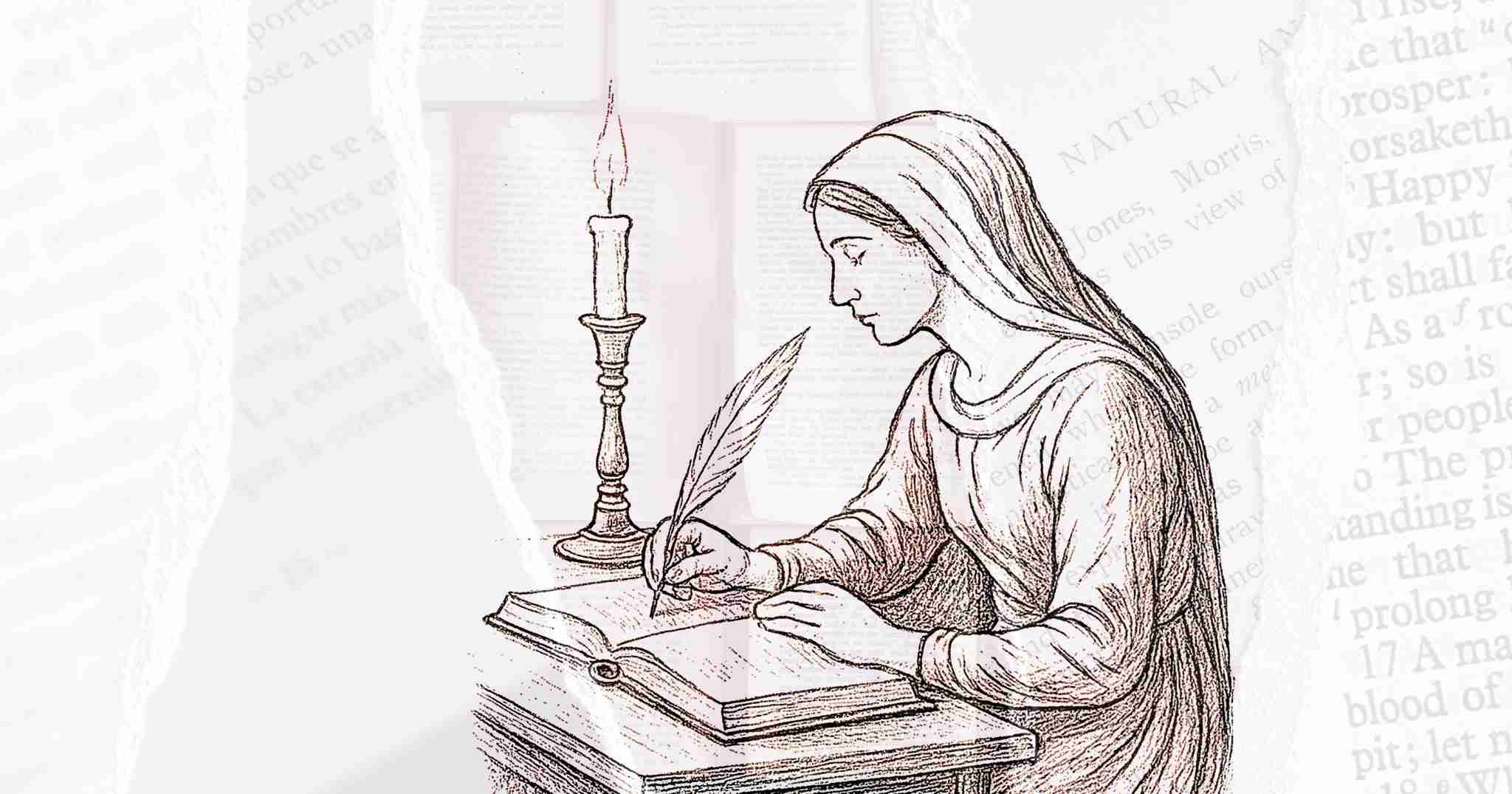
While men have historically received most of the recognition in fields like theology, philosophy, and biblical studies, women have been teaching, writing, and shaping Christian thought for centuries. Whether from the early church, the Middle Ages, or today, their contributions are essential. When women engage Scripture, they bring questions and insights others have overlooked. They challenge assumptions and expand our understanding of God, helping the church imagine a broader picture of the truth. The differences between genders are exactly why it is so important to have both women and men speaking into the church, working together to interpret Scripture, and doing theology side by side. When only half the church’s voice is heard, we miss out on half the wisdom and experiences God has given us.
In this issue of Mutuality, we turn the spotlight on the women whose work has strengthened the church. You’ll meet reformer Katharina Schutz Zell and novelist-theologian Dorothy Sayers. After that, read about a pioneer of women’s education in the United States, Catharine Beecher, followed by medieval mystic, Julian of Norwich. Finally, Mimi Haddad will guide us through a brief overview of impactful women from the early church through today. As the issue wraps up, you’ll also find a “Staff Picks” list to help you start building your own reading list—female authors who have especially shaped and inspired our team at CBE.
As you read this issue, I hope you are encouraged; you are not alone. May you go into the New Year confident in your calling, no matter the area, and stand tall on the shoulders of the women who have gone before.