
A daughter of immigrants, our family struggled to make the US our home. Unlike our neighbors, our family was small and lacked extended relatives and social networks. Struggling to seamlessly blend into US culture, my grandmother had difficulty learning English and rarely socialized outside our home. We ate foods others found odd, and our clothes seemed equally strange. When my uncles visited, they wore long robes, carried prayer beads, and spoke a guttural language that sounded peculiar and harsh. Part of an honor-shame culture, we valued the elderly as much as our ancient church—both out of step with US culture. Imagine my delight in meeting Dr. Cathie Kroeger—a CBE founder deeply committed to the global church.
We met at Harvard, where Kroeger was studying Syriac—the language of our Maronite tradition. In building an international organization that vigorously uncovered women’s leadership in Scripture and history, Kroeger was unearthing the biblical status of women long buried by bias and ignorance. She consistently maintained a learning, humble posture that was welcoming and respectful. It was love at first sight.
From the beginning, CBE was committed to serving international Christians in the global church with the best biblical resources available—most developed by our founders and early board. Dedicated to irenic conversations, our resources aim at cultures in the West and beyond.
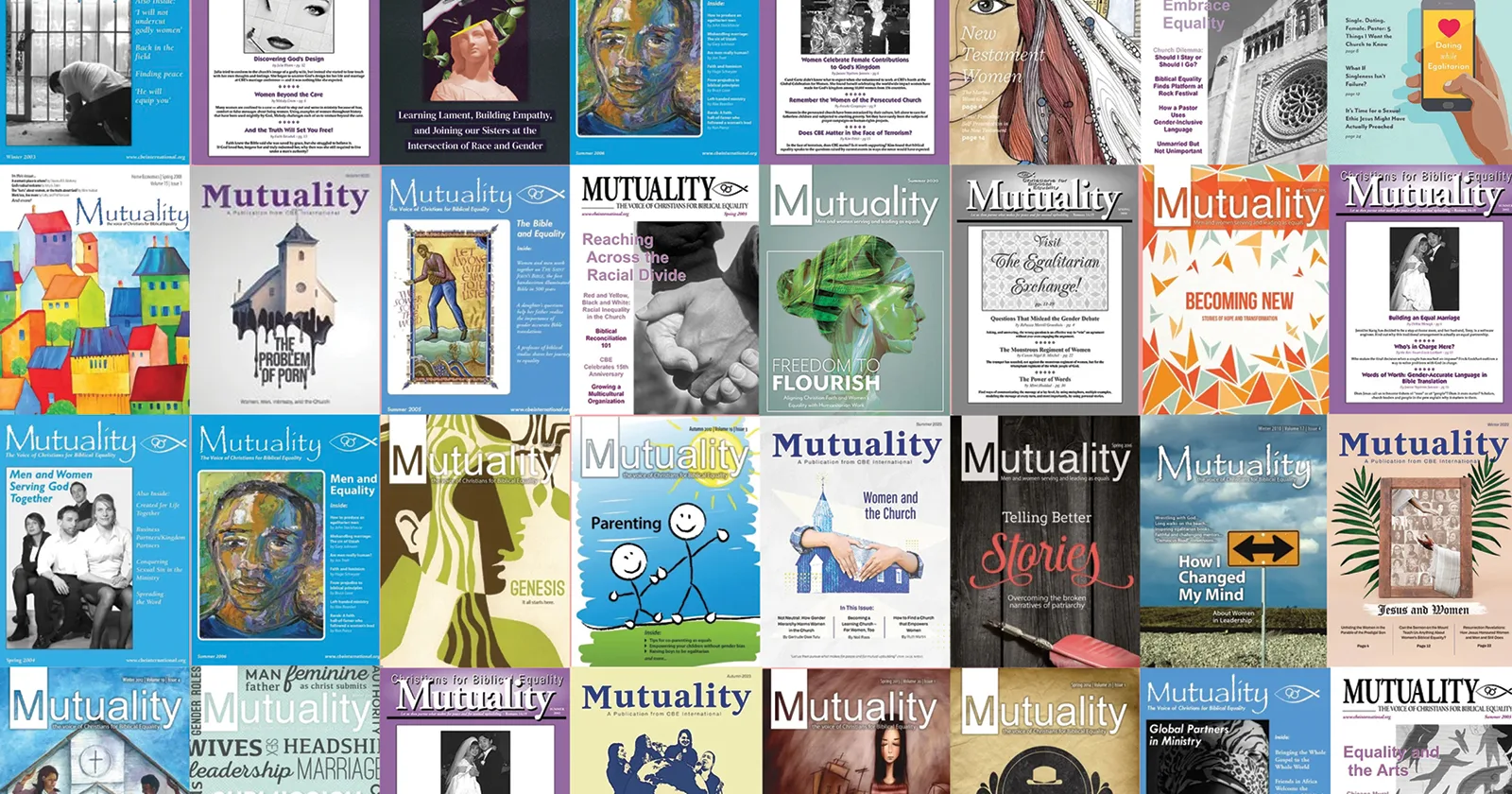
As CBE International, we’ve translated key resources into more than thirty languages. We have published articles from international authors in both Priscilla Papers and Mutuality magazine. Most recently, we implemented a tool that enables our entire website to be translated into seventeen languages. Our radio spots on “Women in Scripture and Mission” are aired in English and Spanish, resulting in significant impact with listeners calling the station saying, “We’ve never heard anything like this before!” Minutes after our radio spots air, website visits increase significantly; some days we have over 3,000 requests to translate our website content into Spanish! As funding increased, CBE began hosting yearly conferences alternating between the US and abroad in countries like Kenya, South Africa, Colombia, and Finland. This summer, CBE held its first conference in Brazil, establishing an egalitarian footprint in the fifth-largest country in the world.
Over 40 percent of evangelical families in Brazil encounter abuse. Barred from ministry roles, women in many churches may even be restricted from playing instruments during worship. Brazil had very few egalitarian books in Brazilian Portuguese until CBE’s 2023 International Conference in São Paulo, themed “Setting the Record Straight: Women and Scripture.” There, attendees received two CBE books translated into Portuguese, both of which are now available online and in bookstores throughout Brazil, with other titles soon to follow. And while Brazil’s primary language is Portuguese, we were thrilled that every single one of the copies of Priscilla Papers and Mutuality magazine (in English!) were snapped up by attendees on the first day.
The model of irenic biblical engagement at the conference in Brazil followed a pattern established in India in 2007 when CBE held its first event in the subcontinent. The local CBE chapter continues to flourish under leaders like Havilah Dharamraj, chapter leader and editor of Priscilla Papers. Her ongoing work in India provides invaluable insight and a much-needed international perspective in our publications as we keep our eyes on the big picture of what God is doing in the global church.
In cultures where egalitarian theology has been marginalized or that have little access to CBE’s message, these are communities where CBE finds our calling—like the Evangelical Theological Society (ETS). Until recently, women comprised around 6 percent of ETS members; women scholars encountered humiliation; and no woman had served on the executive committee until this year. These and other examples represent communities where CBE creates cultural and linguistic bridges to bring Scripture’s teaching on women and leadership. Every year that passes, our calling proves more critical. Why?
Thankfully, with the vast number of excellent egalitarian resources published in English every week, CBE can barely keep up with reading and reviewing the books we receive. Yet, there are women and men who have little to no access to egalitarian resources in their language and they desire our support. Given the impact of our message in communities that “have yet to hear,” it is no accident that I met Cathie Kroeger that chilly spring morning at Harvard. Her calling and mine were forged in collaboration with global leaders in bringing God’s Word to Women to all the world, to reach women like my grandmother, isolated in their context. Now, thankfully, we have several resources in Arabic and from a Middle Eastern context that skillfully and graciously include women as Jesus did, lovingly and humbly. CBE can do no less.