

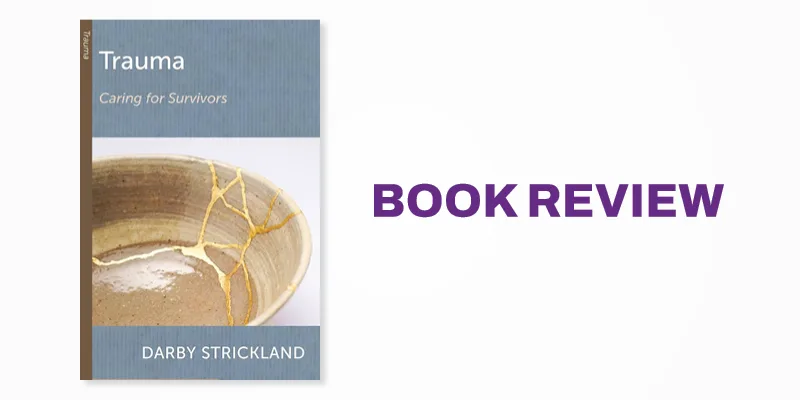

Darby A. Strickland, counselor and trauma expert, has authored a small but mighty book, Trauma: Caring for Survivors, part of the Resources for Changing Lives Ministry Booklet series. This booklet is written for anyone who wants to come alongside individuals suffering from trauma regardless of training or experience. Untrained people may feel overwhelmed or inadequate when faced with someone experiencing trauma. As Strickland points out, “Whether you are a professional counselor, someone in church ministry, or a concerned friend, there are ways you can help.”
The author writes in a caring yet strong voice, conveying the impacts of trauma and outlining how to engage individuals compassionately and intentionally. While the impacts of trauma are vast and require comprehensive care, Strickland gives us thoughtful, straightforward, and biblical guidelines anyone can benefit from.
Strickland begins with a brief overview of trauma, its symptoms, and challenges. She continues with a focus on foundational trauma care by addressing the overwhelming impacts of a survivor’s trauma, directions on stabilizing the survivor, and guidance on building trust before delving into the intimate details of the story and struggle.
Strickland’s outline helps readers understand the three foundations of trauma care. The first is discovering the trauma’s scope and impact. While we may be tempted to start with gathering details, here and throughout the book, Strickland states we must shift our focus to the person’s response to the trauma and how they are processing the experience. Our first step is to attune ourselves to the immediate needs of the individual and to discover how they themselves have responded to and processed their experiences. Only then can we focus on the concerns of the sufferer with a respectful and compassionate response.
Second, Strickland stresses the need to assure the individual’s safety and stability. Are they still in an unsafe environment? Are they at risk of self-harm or suicide? How has this event affected their spiritual life? Do they have stable, safe relationships to draw from?
The third foundation of trauma care is building trust between yourself and the individual. A solid foundation of safety and trust is a gradual process that can create reliable support through the healing process.
An added resource included in the book is “A Plan for Finding Refuge in Moments of Distress.” It is a step-by-step process an individual can follow during times of distress, which includes warning signs of distress and poor strategies; creating physical comforts and safe environments; identifying trusted individuals to contact, etc.
The key feature of Strickland’s writing is the calling as Christians to be both trauma-informed and biblical. While many sources can help familiarize us with the emotional and physical aspects of trauma, the uniqueness of this work is the author’s examination of the role trauma plays in a person’s spiritual life. Strickland takes the position that religion and spirituality should indeed be considered in the context of trauma, because they are often closely intertwined in human experience. For the many people who experience trauma, among the most damaged and yet often neglected domains is their spiritual life. A person’s faith can be severely challenged.
Recognizing and addressing the influence of trauma on a person’s spirituality is essential to full healing. Restoring a sense of being loved by God and seeing God as not being the culprit in the trauma is key. How does Scripture speak to the person’s heart and situation? What is the impact on the person’s spiritual health? Strickland points out that Scripture’s perspective on human suffering, sin, and redemption has much to say on how we understand traumatic experiences and approach survivors.
This book is written in a universal voice for use by both males and females, clergy or lay person. However, female clergy involved in caring for women specifically will see this as a significant resource in counseling. As women engage women working through trauma, a unique trust can be built from their shared experiences. Women survivors may prefer to work with another female due to these shared gender experiences as wife, mother, daughter, sister, friend, etc. Also, there can be a comfort in discussing certain personal experiences woman to woman, facilitating a strong interrelationship.
That said, I recommend this book to any Christian who is interested in working with individuals dealing with trauma, as well as to trauma survivors themselves. Care for people who have been traumatized is complex, and compassionate trauma care is excruciatingly slow. This easy-to-understand, non-clinical book is a powerful resource for regular people with no specialized training. It will guide the reader in attuning to the specific needs of someone impacted by trauma and then connecting them to the healing heart of God. Through this book you can achieve Strickland’s goal of bringing God’s words of comfort to refresh weary, troubled souls.
Related Resources
Book Review: All My Knotted-Up Life
Book Review: A Church Called Tov: Forming a Goodness Culture That Resists Abuses of Power and Promotes Healing
Book Review: We Too: How the Church Can Respond Redemptively to the Sexual Abuse Crisis
Book Review: She Deserves Better: Raising Girls to Resist Toxic Teachings on Sex, Self, and Speaking Up