

Listen to the Mutuality Matters episode with author Jennifer Powell McNutt.
Listen to the Mutuality Matters episode with author Jennifer Powell McNutt.
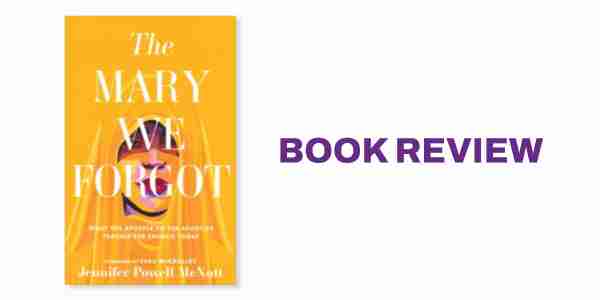
Jennifer Powell McNutt’s latest book, The Mary We Forgot: What the Apostle to the Apostles Teaches the Church Today, is a tour de’ force of Mary Magdalene. In an easy-to-read style, she covers biblical interpretative methods, what scripture actually says about Mary Magdalene, Christian history, and its remembrance of Mary Magdalene. She ends by updating us on modern-day beliefs. As a Wheaton professor of biblical theology and Christian history, Powell McNutt’s writing style teaches its readers by simplifying and explaining ideas. She then brings readers along with her through discussion of her personal experience and academic expertise until they understand the intricacies of their faith and history. But what I found most refreshing about her book is her genuine love of our amazing Jesus, and how she was able to demonstrate that Mary Magdalene’s relationship with Jesus helps all believers, men and women, better know our Lord.
In our house, we could call Powell McNutt gospel centered. Toward this end, she coins her biblical interpretive strategy as “The Hermeneutic of Surprise.” She explains that “A coherent thread of surprise runs throughout Scripture from Genesis to Revelation. God uses unexpected people in their time to do remarkable things that bring glory to God” (11). This describes Jesus’s approach, inaugurating the Kingdom of God by laying down his own life in an act of sacrificial love rather than an expected military victory. And Jesus’s interaction with women, best exemplified in his relationship with Mary Magdalene, abides by this Hermeneutic of Surprise.
Powell McNutt addresses long-standing arguments and speculations about Mary Magdalene and her relationships with the other disciples. Pointing to the non-canonical Gnostic Gospel of Mary, she unpacks the academic controversy surrounding Peter and Mary Magdalene. Were they in a competition for ascendency? She recounts Mary’s commission by Jesus to tell the disciples of his resurrection. Mary ran directly to Peter and the gathered disciples; though the other disciples doubted her, Peter rose and ran to see the resurrected Jesus. Mary and Peter shared a relationship of trust and mutuality, not competition, a model for Christians throughout time.
Beyond scripture, Powell McNutt delves into the church’s history and its portrayal of Mary Magdalene. She looks at the early Roman Catholic conflation of Mary Magdalene with the women who anointed Jesus, highlighting some beautiful traditions that emerged from this conflation, as well as the disturbing and long-standing belief that she was a prostitute. She examines the Eastern church’s traditions around Mary, which differ markedly from the Western Church. Furthermore, she follows the several traditions about her name “Magdalene,” providing a thorough look at the existing scholarship surrounding the name’s meaning.
Finally, an aspect I love about this book is its inclusion of traditions and artwork that are not mainstream, even in academia. For example, she describes a mountain cave church devoted to Mary Magdalene in France. As a historian, Powell McNutt noted the preserved traditions of Mary Magdalene observed in the art, windows, and statues in this church. These worshippers believe, in accordance with the western church’s belief of her postbiblical life, that Mary Magdalene was an apostle and evangelist who lived out her final days in France. I had no idea.
In conclusion, I recommend this book for anyone interested in Jesus. Those who want to understand the significance of relationships among Jesus and the disciples, issues of apostolicity, and more will find much to appreciate in this book. Those who specifically want to know about Mary Magdalene will find the many divergent beliefs and traditions about her collected in one place, with easy to access footnotes that reference original sources. Those who want to better understand women and their place in the early church should add this book to their library. This book needs to be added to church historians’ collections. And as far as I’m concerned, I am glad to have this gospel-centered, academic yet easily accessible book on hand, in my own library.