

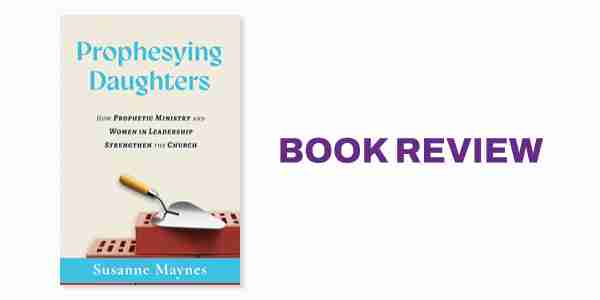
In chapters 1–2, Maynes introduces the reader to three women in the Old Testament who acted as prophets to the nation of Israel: Miriam, Deborah, and Huldah. She presents these women as examples of God choosing to speak prophetically through women, and that this has always been the case. Maynes then discusses what prophecy actually was and how it functioned in the Old Testament, both in terms of content and delivery.
Then, in chapters 3–4, the discussion moves to Elizabeth, Mary, the mother of Jesus, and Anna, three women who played prophetic roles between the old covenant and the new. In this section, Maynes also delves into how prophecy continued from the Old Testament to the New Testament, albeit differently, and stories of the other women whose prophetic roles are recorded in our New Testament texts.
Having established that many prophecies in biblical times were never recorded or canonized into Scripture, Maynes argues that the gift of prophecy continues to this day and need not be confused or in competition with canonized special revelation. Given this, she then moves on to discuss some of the more practical aspects of modern-day prophecy, such as guardrails and how to evaluate prophetic words (ch. 5).
Finally, Maynes spends chapters 6–11 addressing the classic “clobber passages” used to exclude women from leadership and teaching roles, and she makes a clear case for an egalitarian stance. As someone who regularly exercises the spiritual gift of prophecy, and as the book’s subtitle suggests, Maynes argues that the exercising of prophecy and the leadership of women are necessary for the strength of the church.
Though there is not much in Prophesying Daughters that is new or groundbreaking, this book will likely be helpful for readers looking for an easy-to-understand overview of prophecy, specifically from an egalitarian perspective. The clear and accessible writing makes it appealing to a popular audience. Maynes also includes research from scholars with diverse theological viewpoints and addresses these throughout the book, so readers will be able to use the author’s citations to do any further reading that may interest them.
Experienced CBE readers will likely be familiar with the “clobber passages” Maynes addresses, how they are used by complementarians, and how they are refuted by egalitarians. However, Prophesying Daughters will provide a useful introduction for those who are newer to discussions of these passages or who want a concise distillation of other possible interpretations. In terms of prophecy, readers who come from charismatic Christian circles can benefit from Maynes’s female-focused discussion of prophecy, while readers who are less familiar with the topic of prophecy, or who are skeptical of the modern-day exercise of it, will likely benefit from Maynes’s accessible discussion of this misperceived gift.
Related Resources
Book Review: Your Daughters Shall Prophesy: Amplifying the Voice and Place of Christian Women
Book Review: Roman Wives, Roman Widows: The Appearance of New Women and Pauline Communities
Book Review: No Little Women: Equipping All Women in the Household of God
Book Review: On Purpose: Understanding God’s Freedom for Women Through Scripture