

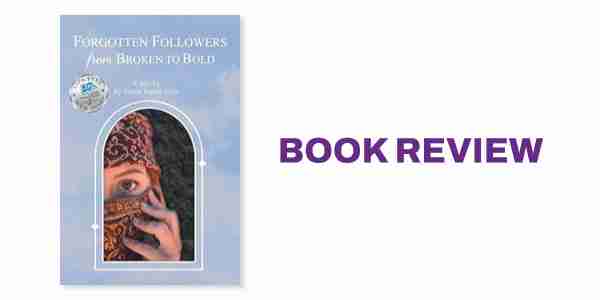

Forgotten Followers: From Broken to Bold is a novel that follows Jesus’s ministry through the eyes of Jesus’ mother, Mary, his disciple and financial supporter Joanna, and Mara, a fictional character that the author imagines as Mary’s sister-in-law, the wife of Joseph’s brother Clopas. Kelly begins her book with a family tree, a cast of characters, and historical notes. She also helpfully explains which Bible verses she references throughout the story. The narrative perspective alternates from one woman to another, while still following the general account of Jesus’s life as outlined in the New Testament. There are several creative liberties taken with the stories, such as Jesus saying, “You are blessed,” directly to his mother (249), which was said to the Peter in the Bible (Matt. 16:17).
Kelly also includes additional teaching from Jesus that is consistent with what is taught in other parts of Scripture, although not found in the Gospels. For example, Jesus says to the woman who pours perfume on him that, “All have fallen short of the glory of God,” But I will wash you and make you clean so you are free to approach God. Keket’s great demonstration of love shows great gratitude. Her actions show she is taking the right path. Keket, your faith has delivered you. Go in peace. (91)
This is a word-for-word reference to Romans 3:23, which was written after Jesus died. The verse is in the Bible—Jesus just didn’t say it. There are other fictional elements like that of portraying Jesus’s siblings in a way not seen in Scripture, and the author takes the stance that Jesus’ siblings did not believe in him until his resurrection. Other fictionalized elements in the story include a more detailed description of Jesus’s siblings that goes beyond what we see in Scripture, including the idea that they did not believe in him until his resurrection. If the reader is looking for a completely accurate depiction of the Bible, this book will not provide that. It is not meant to be used as a replacement for Scriptures but is a fictional narrative that can bring us a fuller, more human understanding of the characters and true events surrounding Jesus’s life and ministry.
A strength of Forgotten Followers is the well-written characters. This book effectively points out the struggles of women in that culture, especially in the attitudes towards them. This will resonate deeply with many of us who have felt unseen or unloved because of gender. The change between the women’s outlooks at the beginning of the book and their attitudes at the end illustrates the beautiful transformation that happens as a result of Jesus’ love and acceptance. Mara and Joanna transform into a bold followers of Christ.
I appreciated the up-close look at Jesus’s ministry and the different perspectives this book provides on well-known Bible stories. I believe many women will identify with the struggles of the main characters and the doubt we feel as women because of what we are told by men. The book draws attention to the ways that these women supported Jesus through his ministry, which is not something I have come across before in traditional interpretations of the Bible. There are several times where the women understand Jesus’s teachings better than the men. After Jesus rises from the dead, the women are the first ones who see him. When they try to tell their husbands and the other disciples, no one believes them. However, Jesus later blesses the women for their faith. The men in this book have flaws and their doubt and mistakes are shown, which is refreshing.
There are some areas for improvement. There are a lot of exclamation points in this book and it started to feel unnecessary about halfway through. The use of other punctuation would have helped. This book is mostly dialogue, so there are not a lot of detailed descriptions. It occasionally felt like a summary of events instead of a story. The “fact or fiction” section at the end about what happened to the female disciples after Jesus’s return to heaven are heavily dependent on extrabiblical sources and the Catholic apocrypha, but this was not the main focus of the book. Still, I would advise caution with the notes at the end so as not to be confused with what’s in the Protestant Bible. The author explains each woman from the Biblical perspective, the church tradition, and where she personally added elements, so she does address the extra sources.
Overall, I do not think these issues detract from the book’s message and believe that this is an engaging and interesting read. Not many books tell Jesus’s story in detail through the eyes of the women who supported him, making this an eye opening and engaging book.