


In the spring of 2023, I briefly served as interim children’s ministry leader at my church while our youth pastor was on maternity leave. My job mainly consisted of preparing craft materials and illustrations from the weekly lessons provided by the Sunday school curriculum. One Sunday morning, the lead pastor found me in the church office frantically Google-searching images. “Is there anything you need for today?” she asked.
“I’m just looking for a few more pictures,” I replied. “The preschoolers’ lesson for this week is the calling of the disciples. The takeaway is supposed to be, ‘Jesus loves everyone’—and according to the curriculum, this is ‘everyone’.”
I held up a cartoon image of twelve men standing in a row.
“Oh no,” the lead pastor groaned.
Another member of the pastoral staff looked up from his desk. “Twelve people who all look the same?” he said. “And they’re all men!”
“Yeah,” I said. “That’s why I’m looking for a few more illustrations to help round out the picture.”
“Thanks for doing that,” said the lead pastor. “Let me know if you need anything.”
As she closed the door to her office to prepare for her sermon, I thanked God for a church where both male and female pastors understood why I felt such an urgent need to add more to the picture our kids been given.
The Gospels present a ground-breaking narrative when you consider the culture in which they were written and originally read. The main character, Jesus, constantly breaks social rules and subverts expectations. The supporting cast includes people from diverse social, political, and ethnic backgrounds. Perhaps most shocking of all, the most significant events of the story are first witnessed by women!
In a modern Western context, it can be easy to forget how little power women held in ancient Israel. A woman could not own property, choose whom to marry, or give testimony in court. And yet, God chose women as the first witnesses to both the incarnation and the resurrection of Jesus.
Matthew’s Gospel begins with a genealogy of Jesus (Matt. 1:1–17), including Tamar, Rahab, Ruth, and Bathsheba, reminding his readers that without these women (and many other great-great-grandmothers whose names are not recorded), Israel would never have known their Messiah. Luke spends the first chapter of his Gospel describing the reactions of Jesus’s mother Mary and great-aunt Elizabeth to the news that the Messiah is going to be born (Luke 1:26–56). The inclusion of these women at the beginning of the narrative sets the stage for the integral roles women will play in Jesus’s ministry as an adult.
Throughout the Gospels, Jesus chooses to interact with women in ways that subvert the social codes and accepted gender roles of the time. He makes their work the subject of parables. He commends their faith and invites them into theological dialogue. He relies on their partnership to support his growing ministry. And it is often in Jesus’s interactions with women that essential truths about his identity and mission are revealed.
The Samaritan woman at the well is the first person to whom Jesus reveals his identity as the Messiah (John 1:1–4). The Canaanite mother who persistently asks for her daughter’s healing is the first to understand that Jesus’s power transcends cultural barriers (Matt. 15:21–28). Martha of Bethany is the first to state her belief that Jesus is the resurrection and the life (John 11:21–27). And Mary Magdalene is the first person to witness Jesus’s resurrection with her own eyes (John 20:10–18). Jesus knew that in that time, the word of these witnesses would not be considered valid, yet he still chose to entrust to them the parts of his mission that would be most difficult to believe; this was not a choice he would have made by accident or mistake. If we want to understand what the story of Jesus is all about, the role of women cannot be ignored.
Yet all too often, sometimes without realizing it, Christian churches tend to erase women from our presentations of the Gospel. We decorate our worship spaces with depictions of the Last Supper—thirteen men who all look more or less the same, crowded around a table––and leave women wondering if there is any room at the table for them. At Christmastime, when our children dramatize the story of Jesus’ birth, Mary smiles silently while she holds a baby doll, but we never get to hear her prophesy about the redemption God will bring about through her child, or see Elizabeth affirm and encourage her God-given calling. We teach our children songs about “following Jesus, just like Matthew, Peter, and John,”[1] but never “just like Joanna, Susanna, and Salome.” Even in churches like mine where women are affirmed and valued as equal ministry partners, it takes intentional effort to ensure that we practice what we preach—or more often, as in the case of the Sunday school lesson I encountered, that we preach what we practice.
When we erase women from our teaching of the gospel, we lose the profound truths about Jesus contained in their stories. Not only do we miss the faith, wisdom, and courage that these women exemplify, but we also miss Jesus’s responses to them. We end up with a picture of Jesus that is incomplete. We miss his courage, which crosses cultural boundaries and promotes the flourishing of others at the cost of his own reputation. We miss his radical compassion for the marginalized and exploited. We miss his gentleness, which allows those who are used to being ignored, silenced, or abused to come to him with full confidence that their needs will be met. We also end up with an incomplete picture of the church, missing the diversity and equality that set the earliest followers of Jesus apart from the society they lived in. And when that picture of the church is all people ever see, we end up with a church that looks more and more like it, where women and other marginalized groups gradually disappear, because they have never been told or shown how much God wants them to be there. Why join or stay in a church when you do not see a place for yourself at the table?
On that Sunday morning, while our pastor preached her sermon, I got to show my preschool class a more complete picture of who is called to follow Jesus. I began with the scripted lesson, telling the kids how Jesus had called his disciples from different places and different walks of life. I showed them the picture of twelve men. “These men were all friends with Jesus,” I told the class. “But did you know Jesus had even more friends?”
I held up a photo of a mosaic from the Duc In Altum church in Magdala that a friend had sent me from her pilgrimage there. “This is Jesus and his friend Mary,” I said. Two or three little girls who had been sprawling on the floor suddenly sat up. “Does Mary sound like a boy’s name?” I asked them.
“No!” several preschoolers shouted back at me.
“That’s right!” I said. “Mary was a woman who was friends with Jesus. Jesus helped her, and then she helped tell other people about him. And look––” I held up a picture book with Mary and Martha of Bethany on the cover. “Here’s another Mary, and her sister Martha,” I said. “Both of them were friends with Jesus too!”
I showed them screenshots from the TV series The Chosen: Jesus with a group of women of different ages and skin tones, dressed in different styles of clothing. Jesus teaching a mixed group of girls and boys. “There were even more women who followed Jesus,” I said. “His mother, who was also named Mary; Joanna, Susanna, Salome, and lots of others whose names we don’t know. Even some girls and boys who weren’t much older than you. And Jesus wants to be your friend, too. You can follow him, just like they did. Everyone can be friends with Jesus.”
In a few years, the children in my class will be sitting beside their parents, listening to a female pastor preaching God’s word. Maybe someday, one of the little girls who perked up her ears when she heard the name “Mary” will be standing in front of the congregation teaching them. Maybe one of them will write her own Sunday school curriculum, where the women of the Bible get just as much lesson time as the men. I pray that as they grow, the church will be blessed by their faith and by their gifts as they follow in the footsteps of Elizabeth, Mary, Martha, Joanna, and so many others, because they know that they belong in the picture.
[1] Evans, Rob. “We’re Following Jesus.” Follow the Leader. Integrity Music, 2001
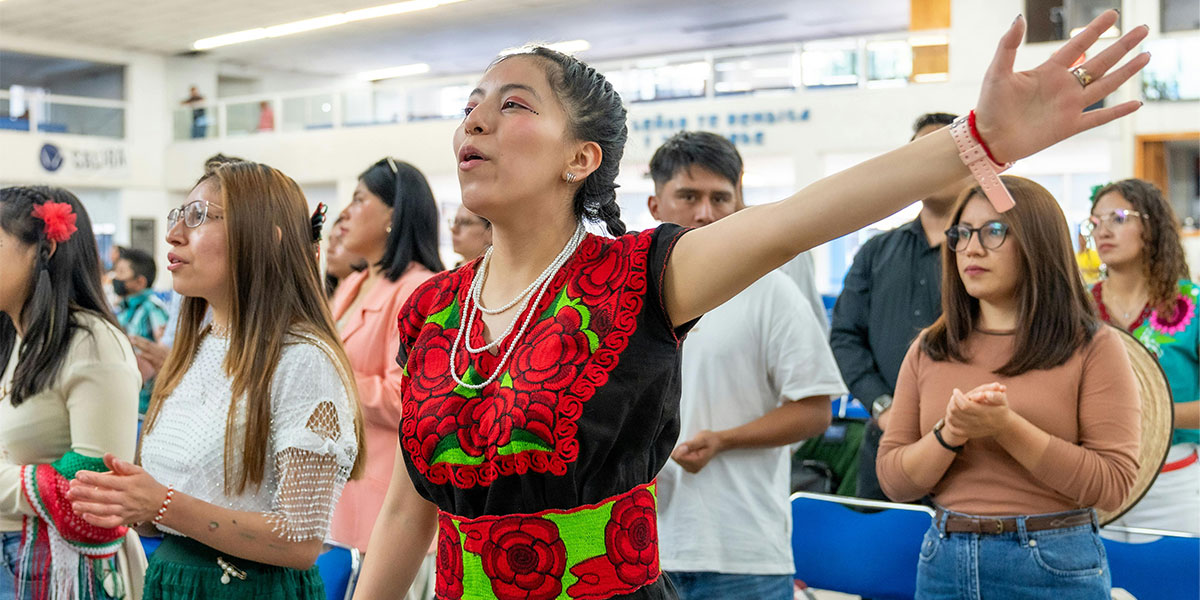
Photo by Israel Torres.
Related Resources
Popular Articles
From Prostitutes to Priests: How We Imagine Women Matters
Galilee’s Got Talent! How the Arts Empower Women
“Talking with a Woman…”
Four Attitudes of Jesus that Empower Women
Unhiding the Women in the Parable of the Prodigal Son
Rediscovering the Towering Faith of Mary Magdalene
Joanna, The Counter-Cultural Reality of Discipleship
Academic Articles/Book Reviews
Book Review: Women and the Gender of God
Book Review: Tell Her Story: How Women Led, Taught, and Ministered in the Early Church
Raising Up Allies: A Standardized Pathway for Developing Men into Allies to Women
From Bobbed Hair, Bossy Wives, and Women Preachers to Woman Be Free
Why? Oh, Why Am I a Woman?
Martha the Minister: A Sermon on Luke 10:38–42
Audio/Visual Materials
Audio: Jesus and Women: A Close Look at the Gospels with Cynthia Muniz Soares
Video: Jesus and Women: A Close Look at the Gospels with Cynthia Muniz Soares
Audio: Using Biblical Female Imagery to Bolster Self-Esteem in Women
Video: Using Biblical Female Imagery to Bolster Self-Esteem in Women
Intersectionality: Telling Her Story through Allyship and Agency with Rev. Dwayne Jackson
Intersectionality: Where Do We Begin? Finding Our Place in God’s Plan
Intersectionality: The Narratives that Shaped Us with New Co-Host Rev. Liz Testa
Intersectionality: Let’s See Color! With Guest Michelle T. Sanchez