What does the Creation account tell us about gender?
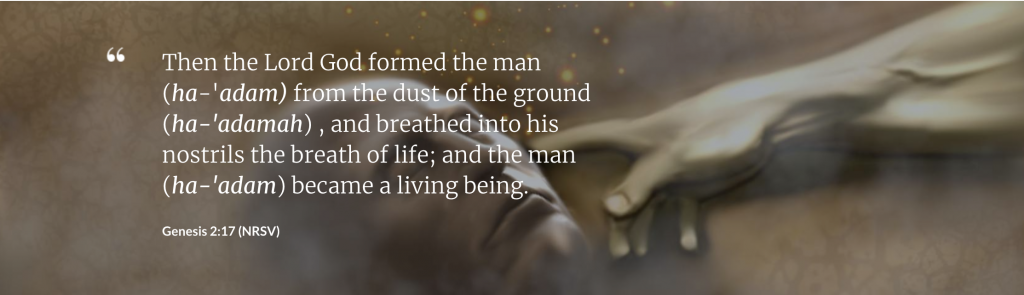
What does Adam mean? In the first few chapters of Genesis, the meaning of ‘adam is fuzzy on purpose, so that the text can tell us many things about humanity. Hebrew is a gendered language, which means every word is either masculine or feminine. “Dirt” or “earth” in Hebrew uses the feminine noun ’adamah, while the same noun in masculine form, or Adam (’adam), means something like “earthling.” We have this in English, too. Our word “human” is related to “humus,” an old word for soil.
In Hebrew the masculine nouns are used for mixed groups of both males and females. The feminine nouns are reserved for females only. So, to designate a generic word for humanity that can include males or females, ‘adam is used. In Genesis 1, ’adam is not an individual, but rather, humanity as a whole.
“When God created Humankind (‘adam), he made them in the likeness of God. Male and female he created them, and he blessed them and named them ‘Humankind’ (‘adam) when they were created.”
Genesis 5:1b-2 (NRSV)
While there is a person named Adam, Genesis also uses ’adam to talk about a big-picture, gender-neutral concept where both male and female are equally human, made from dust and will return to dust, and made in God’s image. Genesis 5:1b-2 summarizes this idea.
They are of the same physical and spiritual substance. But what about their differences as male and female? This question will be answered in more detail in the next lesson, but sit for a moment and consider the implications.
Consider
Sharing Humanity, Not Neutralizing Gender
Another view
Puzzling Reflections: What It Means to Be Male and Female Humans
Dig Deeper
Social Science Studies Cannot Define Gender Differences